

Short answer: Deed updating converts an old paper title deed into an electronic deed through the Ministry of Justice's Real Estate Exchange platform, which offers three request types: update a manual deed, update a lost deed, and amend an electronic deed. Most rejections are caused by owner or property data that does not match the deed, or by area and boundary differences on the ground, which is where a land survey helps.
For the general steps and basic requirements, see converting a paper deed to electronic. This article focuses on problems and their solutions.
Key Points
- The service runs on the Real Estate Exchange via Nafath, without visiting a notary.
- The original paper deed is not required; copies of documents suffice.
- A deed is only updated after it is verified against its record and confirmed valid.
- An updated deed is a practical prerequisite for most municipal and property services.
Why an Updated Deed Matters for Your Engineering Project
Property and municipal platforms rely on the electronic deed. Without an updated deed, these stall: the building permit, the survey decision, subdivision, sale, mortgage and financing.
Types of Deed Update Requests
| Request type | When to use it |
|---|---|
| New update | An existing paper (manual) deed you want converted to electronic |
| Lost deed update | The paper deed is lost and you want an electronic deed issued |
| Electronic deed amendment | An electronic deed whose data needs amending |
Updating a Deed in Brief
- Log in to the Real Estate Exchange using the National Single Sign-On.
- Choose the request type: new update, lost deed, or electronic deed amendment.
- Enter the required data: deed, owner and property details.
- Attach the required and supporting documents.
- Confirm the declaration and submit the request.
Reasons a Deed Update Is Rejected and Their Solutions
1. Owner data does not match the deed
Such as a changed name or an old ID number. Solution: attach the owner data amendment document or family card, as applicable.
2. Area or lengths differ on the ground
Old deeds were sometimes written with approximate lengths. Solution: an accredited land survey establishing the actual lengths and area, then resolving the difference through the proper route.
3. Unclear boundaries or neighbours
A deed saying "bounded by so-and-so's property" without plot numbers. Solution: a survey linking the plot to the approved plan and neighbouring plot numbers.
4. No coordinates or undefined location
Solution: determine coordinates through a land survey and attach them to the request.
5. The deed is suspended or encumbered
A mortgage, restriction or dispute. Solution: lift the restriction or resolve the matter with the competent authority first.
6. Joint or inherited ownership
Solution: attach the heirs certificate, the necessary powers of attorney and the partners' consent.
Before You Submit: Prepare This Data
| Data | Where to get it |
|---|---|
| Deed number, date and issuing office | From the paper deed |
| Owner details | Current IDs and any name amendment document |
| Property details | Plot number, plan, neighbourhood and city |
| Lengths and boundaries | From the deed, verified by survey if in doubt |
| Coordinates | From the land survey |
| Supporting documents | Heirs certificate, powers of attorney, previous records |
An Updated Deed and Your Future Projects
- Building permit: starts with a survey decision linked to an electronic deed.
- Subdivision and merging: done through the Real Estate Exchange on electronic deeds.
- Sale, mortgage and financing: faster and clearer with an electronic deed.
- Inheritance: dividing an estate is easier when deeds are updated.
When Is an Area Difference a Serious Problem?
Small differences from old measurement accuracy are common, but a large difference, an overlap with a neighbouring plot, or a plot located differently from the plan needs longer treatment. In these cases, do not start design or a sale before resolving the deed, because every later step will stop at the same problem.
The Engineering Office's Role in Deed Updates
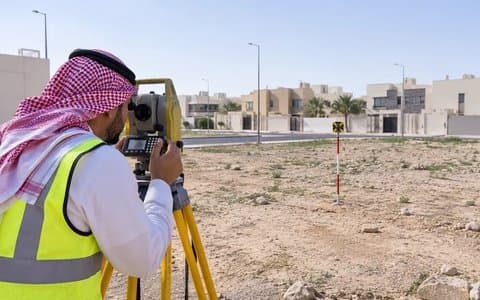
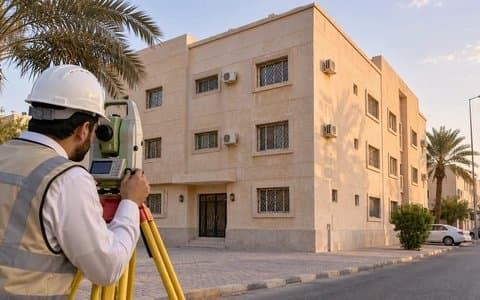
The Ministry of Justice performs the update itself, but an engineering office resolves the technical side: the land survey; determining lengths, area and coordinates; a report explaining differences between the deed and the site; and later the survey decision you will need for the building permit. See our land surveying service.
With Abak Engineering Consultancy
We carry out accredited land surveys, identify deed discrepancies, prepare the supporting technical report, and continue with you to the survey decision and building permit.
Contact us: Land surveying service | 0531145777
Frequently asked questions
Where do I update a property deed?
Through the Ministry of Justice's Real Estate Exchange using the National Single Sign-On.
Do I need the original paper deed?
No. The Ministry of Justice directed that copies of documents uploaded online are sufficient.
How long does a deed update take?
The Ministry of Justice announced that requests are completed within no more than ten days when the data is complete.
My request was rejected over an area difference. What now?
Request an accredited land survey to establish the actual area, then resolve the difference through the proper route.
Can a lost deed be updated?
Yes, there is a dedicated request type for lost deeds.
Does Abak provide land surveys for deed updates?
Yes, with a report showing lengths, area and coordinates.