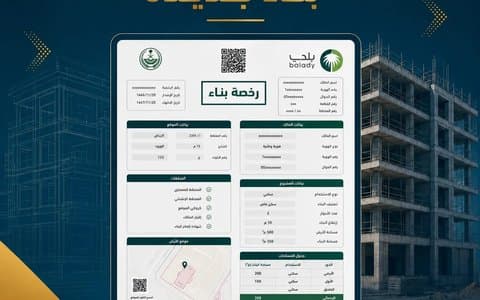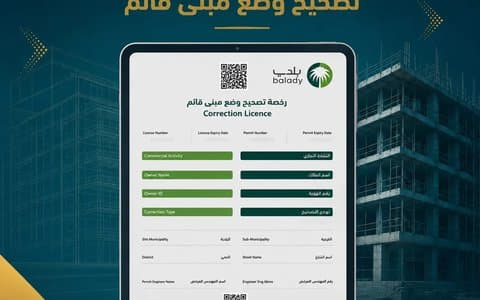

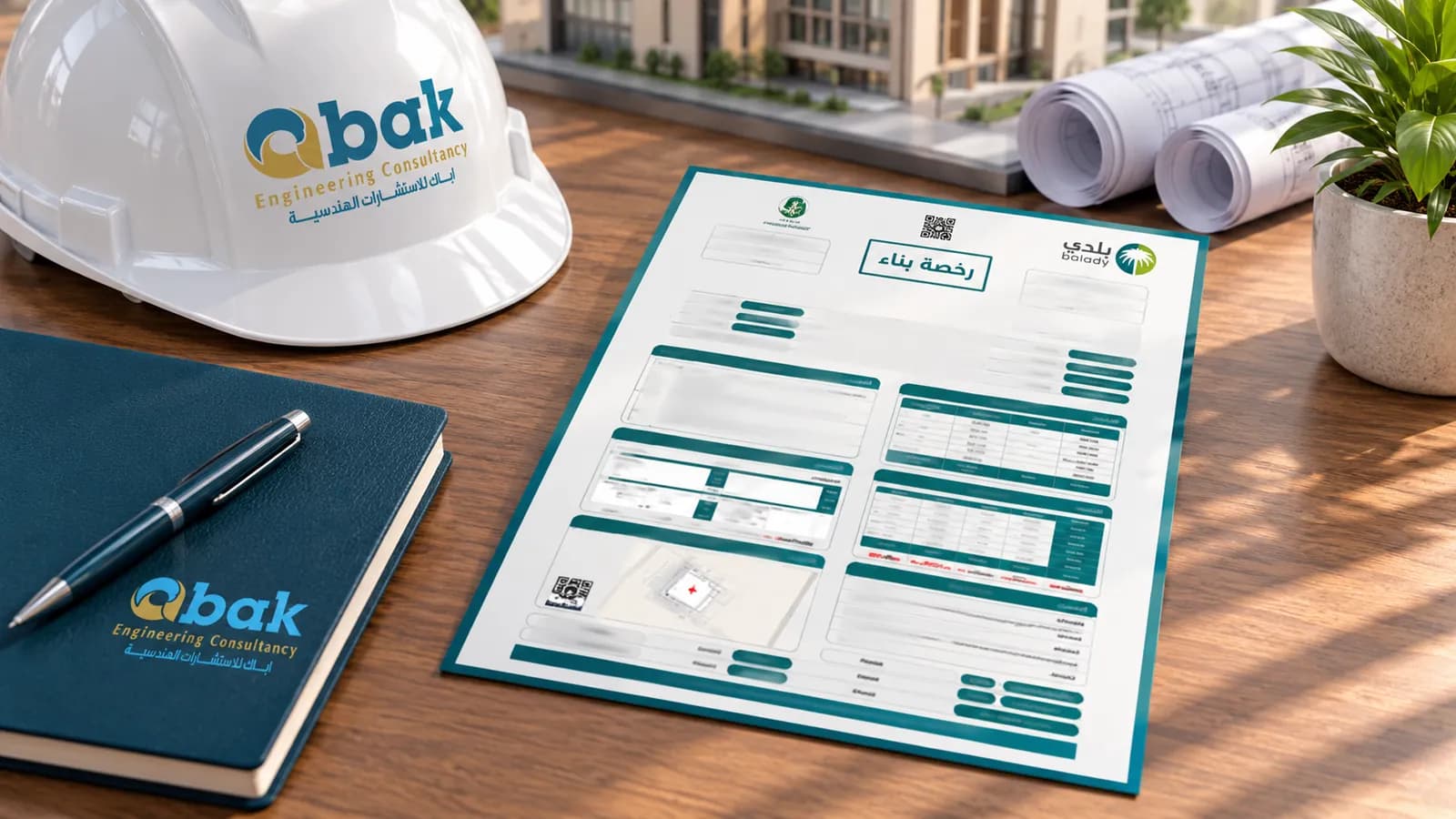
A building permit is the official approval issued by the municipality through the Balady platform that allows an owner to start construction based on approved drawings that comply with the Saudi Building Code. Construction cannot legally begin, and a completion certificate cannot be obtained later, without a valid permit. The application is submitted electronically only, through a licensed engineering office.
This guide covers everything an owner needs before applying: permit types, requirements, documents, step-by-step issuance, latent defects insurance, validity and renewal, and the most common reasons applications are delayed or rejected.
Contents
- What is a building permit?
- When do you need a building permit?
- Which permit do you need?
- Building permit requirements
- Required documents
- How to get a building permit through Balady
- The engineering office's role
- Latent defects insurance and the technical inspector
- Permit validity and renewal
- Fees and costs
- Common reasons for delay or rejection
- After the permit is issued
- FAQ
What is a building permit?
A building permit (also called a construction permit or structural permit) is an official document confirming that a project has been reviewed and approved by the competent authorities before construction. It records the land data from the survey decision, building use (residential, commercial, mixed), number of floors, areas, setbacks, the design and supervising engineering offices, and the contractor.
The permit exists to ensure the building is structurally safe, complies with zoning and setback requirements, and meets the Saudi Building Code for structure, electrical, plumbing and safety.
When do you need a building permit?
- Constructing a new building on vacant land (villa, residential building, commercial building, warehouse).
- Adding a floor or annex, or modifying an existing building (usually through an addition and modification permit).
- Restoring or demolishing a building, each with its own permit.
- Fencing vacant land or a built plot.
- An existing building with no permit, or built in violation of its permit, which requires a status correction permit.
Which permit do you need?
Many applications are delayed simply because the owner applied for the wrong type. This table covers the most common cases:
| Your situation | Permit type | Service |
|---|---|---|
| Vacant land, planning to build | New building permit | Building permit issuance in Riyadh |
| Existing building without a permit or in violation | Status correction permit | Existing building status correction permit |
| Adding a floor, annex or internal changes | Addition and modification permit | Addition and modification permit |
| Fencing land | Fencing permit | Land fencing permit |
| Construction completed | Completion / occupancy certificate | Occupancy certificate |
Building permit requirements
According to the Balady building permit service, the main requirements are:
- A valid title deed whose data matches the site. Any discrepancy in area or boundaries must be resolved before applying.
- A survey decision for the land, either issued through the engineering office or selected from an existing decision registered to the owner.
- A contract with a licensed design engineering office registered on Balady, authorized to issue the permit.
- A contract with a supervising engineering office and a classified construction contractor registered on Balady.
- Latent defects insurance for residential and commercial buildings covered by the mandate.
- A soil investigation report, plus a traffic study where the activity or project size requires it.
- Drawings compliant with zoning rules (setbacks, floors, coverage ratio) and the Saudi Building Code.
Required documents
- Owner's national ID or commercial registration, or a power of attorney if applying on the owner's behalf.
- Electronic title deed. Paper deeds should be updated first; see updating title deeds.
- Survey decision, or a request to issue one through the office; see survey report and survey decision.
- Architectural, structural, electrical and mechanical drawings, prepared by the design office.
- Soil report and any additional study required by the project type.
- Supervision contract and contractor agreement.
How to get a building permit through Balady
The service is available electronically only, via the Balady portal or app:
- Log in to Balady, select your user role, then "New Application" → "Issuance Request".
- Select "Issue Building Permit" under construction permit services, then choose the type: building permit or fencing permit.
- Identify the owner and the applicant.
- Select the survey decision: issue one through the engineering office, or choose an existing one.
- Authorize the design engineering office and send the request to it.
- The office prepares and uploads the drawings, which are then reviewed by the municipality and relevant authorities.
- Contracting: the supervising office and classified contractor are selected; the contractor is notified by SMS.
- Latent defects insurance: the request goes to the insurer and the technical inspector reviews the designs.
- Pay the fees: permit fees and the insurance policy premium.
- The permit is issued and printed. It is not valid and cannot be printed until the insurance policy is issued.
Track progress from "My Requests and Licenses" on Balady. To verify an issued permit, see building permit inquiry and printing.
The engineering office's role
Owners cannot issue a building permit on their own; Balady requires a licensed engineering office to prepare the drawings and take technical responsibility. There are two distinct roles:
- Design office: issues the survey decision when needed, designs the drawings in line with zoning rules and the building code, submits them, and resolves comments from the municipality and the technical inspector until the permit is issued.
- Supervising office: monitors construction on site to ensure it matches the approved drawings through to completion.
The choice of office directly affects how fast the permit is issued. Most delays happen in comment-and-response cycles with reviewers; complete drawings from day one mean fewer cycles.
Latent defects insurance and the technical inspector
Latent defects insurance is now a core requirement before a building permit is issued for residential and commercial buildings covered by the mandate. The policy covers defects in structural elements that may appear after completion, for ten years, protecting the owner and end user.
As part of the policy process, a technical inspector reviews the drawings prepared by the design office. Any comment must be resolved before the policy is issued, which makes a complete structural design from the start a key factor in issuance speed.
Permit validity and renewal
Construction permits and survey decisions are valid for 3 years, according to Balady. If construction is not completed within that period, the permit must be renewed. A renewal can be submitted up to 90 days before expiry, specifying the construction status: not started, under construction, or completed.
See building permit renewal for details. For lost permits or permits missing from the platform, see lost building permit replacement.
Fees and costs
Balady calculates permit fees automatically when the invoice is generated. They vary based on:
- Total built-up area and number of floors.
- Building use (residential, commercial, mixed).
- Permit type: new, addition and modification, status correction, fencing.
Beyond Balady fees, budget for design and supervision office fees, the soil report, and the latent defects insurance premium. Official fee details: Balady building permit fees.
Common reasons for delay or rejection
- Deed data not matching the site (area, boundaries or dimensions), resolved by updating or amending the deed before applying.
- Survey decision issues: expired, inconsistent with the deed, or not showing under the owner's name.
- Violating setbacks, coverage ratio or permitted floors for the plan.
- Technical inspector comments on the structural design, or incomplete specialist drawings.
- Missing soil report or traffic study where required.
- Unclassified contractor on Balady, or a delay in the contractor accepting the contract.
- Unpaid insurance premium: the permit stays inactive even after Balady fees are paid.
[[ From ABAK's own applications: add 3–5 real recurring comments from the municipality or technical inspector and how they were resolved. No client names or deed numbers. ]]
After the permit is issued
- Supervised construction: the supervising office monitors each phase against the approved drawings.
- Any change during construction requires an addition and modification permit; otherwise it is a violation.
- On completion, apply for the completion or occupancy certificate; see occupancy certificate.
- Building without a permit or in violation of it exposes the owner to fines under the municipal penalties regulation. The situation can be regularized through a status correction permit.
How ABAK helps
ABAK Engineering Consultancy provides end-to-end building permit services in Riyadh: survey decision issuance, architectural, structural and specialist drawings compliant with the Saudi Building Code, Balady submission, resolving municipality and technical inspector comments until issuance, and site supervision through to the occupancy certificate.
[[ One completed case: building type, the issue, what the office did, the outcome. ]]
Frequently asked questions
Can I get a building permit without an engineering office?
No. Balady requires authorizing a licensed design engineering office to prepare drawings and submit the application, in addition to a supervising office and a classified contractor.
How long is a building permit valid?
Construction permits and survey decisions are valid for 3 years. A permit can be renewed up to 90 days before expiry if construction is not complete.
Is latent defects insurance mandatory?
Yes, for residential and commercial buildings covered by the mandate. The permit cannot be activated or printed before the insurance policy is issued.
How long does it take to issue a building permit?
There is no fixed duration. It depends on drawing completeness, the deed and survey decision being in order, the number of comment cycles with reviewers, and how quickly the contractor and insurance steps are completed.
What is the difference between a building permit and a status correction permit?
A building permit is issued before construction of a new building. A status correction permit is issued for an existing building built without a permit or in violation of one, to regularize it.
Do I need a permit to add an annex or a floor?
Yes. Additions and modifications to an existing building require an addition and modification permit, issued through an engineering office.
Sources
- Balady: Issuing a Building Permit
- Balady: Building Permit Renewal
- Ministry of Municipalities and Housing: Construction Permits Procedures Guide (Arabic)