Short answer: The Civil Defense safety certificate (also called the Civil Defense licence or safety permit) is issued by the General Directorate of Civil Defense. It confirms that a facility meets the requirements for fire prevention, alarm, firefighting and evacuation. It is issued online through the Salamah platform for facilities with a valid commercial registration, or alongside the commercial licence on Balady for activities that allow it. The activity type, area and hazard level determine the route and the documents required.
Many business owners discover the safety requirements late, after fit-out and decoration, and end up with costly modifications or a delayed opening. This guide explains who needs a safety certificate, how it differs from similar documents, the issuance routes, the documents and technical requirements, common reasons for rejection, and the engineering office's role in preparing your file.
The Safety Certificate at a Glance
- Mandatory for commercial and industrial activity, and linked to issuing and renewing the municipal licence.
- Issued through Civil Defense's Salamah platform, or with the commercial licence on Balady for some activities.
- Low-hazard activities are usually issued instantly; higher-hazard ones need documents or an inspection.
- Requirements usually include safety equipment installed by an accredited company and a valid maintenance contract; some activities also need a technical report or safety plan from an engineering office.
- Since August 2026, third-party cooperative insurance is required for eight high-hazard activities.
- Renew before expiry to avoid fines and a blocked municipal licence.
What Is the Civil Defense Safety Certificate?
It is an official licence confirming that a facility has the safety systems and equipment suited to its activity and area, and that its exits, escape routes and installations meet Civil Defense requirements and the Saudi Fire Code. Requirements differ widely between a small shop and a warehouse, a factory, or a venue that receives large numbers of people.
Safety Certificate vs. Similar Documents
| Document | What it covers | Authority / platform |
|---|---|---|
| Civil Defense safety certificate / licence | An operating facility's readiness, in terms of safety systems, to carry out its activity | Civil Defense – Salamah platform |
| Safety permit with the commercial licence | A permit issued within the commercial licence application for approved activities, without visiting Civil Defense | Balady platform |
| Municipal (commercial) licence | Permission to operate the activity at the location from the municipal side | Balady platform |
| Safety plan approval | Review of fire and evacuation system design before construction or when modifying | Civil Defense, through an engineering office |
| Technical report on safety systems | An engineering inspection confirming the facility's systems are sound | Accredited engineering office |
Who Needs a Safety Certificate?
- Shops, restaurants and cafés.
- Offices, service centres, clinics and medical centres.
- Warehouses and storage facilities of all kinds.
- Factories and workshops.
- Schools and training centres.
- Hotels, serviced apartments and collective housing.
- Venues that receive large numbers of people, such as malls and event halls.
Issuance Routes for the Safety Certificate
1. With the commercial licence on Balady
Balady issues the commercial activity licence together with the safety permit from Civil Defense for approved activities, without visiting the authority. The owner enters the registration, activity, area and location, then pays the fees if the activity is instant, or sends the request to the municipality if it is not.
2. Through the Salamah platform
Salamah is a Civil Defense e-service that lets any facility with a valid commercial registration issue and renew its safety licence. It is the usual route for activities that cannot be completed on Balady or that need extra documents.
3. Instant route or inspection route
Depending on the activity code and area, the licence may be issued instantly once documents are complete, or a technical report, plan or site inspection may be required first.
Hazard Level and Its Effect on Requirements
| Level | Examples | Typically expected |
|---|---|---|
| Low | Small retail shops, offices, service activities | Basic equipment and usually the instant route |
| Medium | Restaurants, small commercial centres, light workshops | Wider alarm and firefighting systems; a technical report may be required |
| High | Flammable-material warehouses, factories, crowded venues | Advanced systems, approved plans and inspection, plus insurance for some activities |
This table is a general guide; the actual classification appears on the platform based on the registered activity code.
Documents Required for the Safety Certificate
- A valid commercial registration, and the municipal licence number or application.
- Location, area and the correct activity code.
- A safety equipment installation certificate from a Civil Defense-accredited safety company.
- A valid maintenance contract for the safety systems.
- A technical report on safety systems from an accredited engineering office, for activities that require it.
- An approved safety and evacuation plan, for facilities that require it.
- A third-party cooperative insurance policy, for the activities covered.
Activities Covered by the Cooperative Insurance Requirement
In August 2026, Civil Defense announced that third-party cooperative insurance is required to issue and renew licences for high-hazard or crowded activities. The first phase covers chemical warehouses, used-oil storage, hazardous medical waste storage, wholesale timber, general warehouses holding mixed goods, tyre warehouses, paint manufacturing and industrial detergent manufacturing.
Technical Requirements Usually Inspected
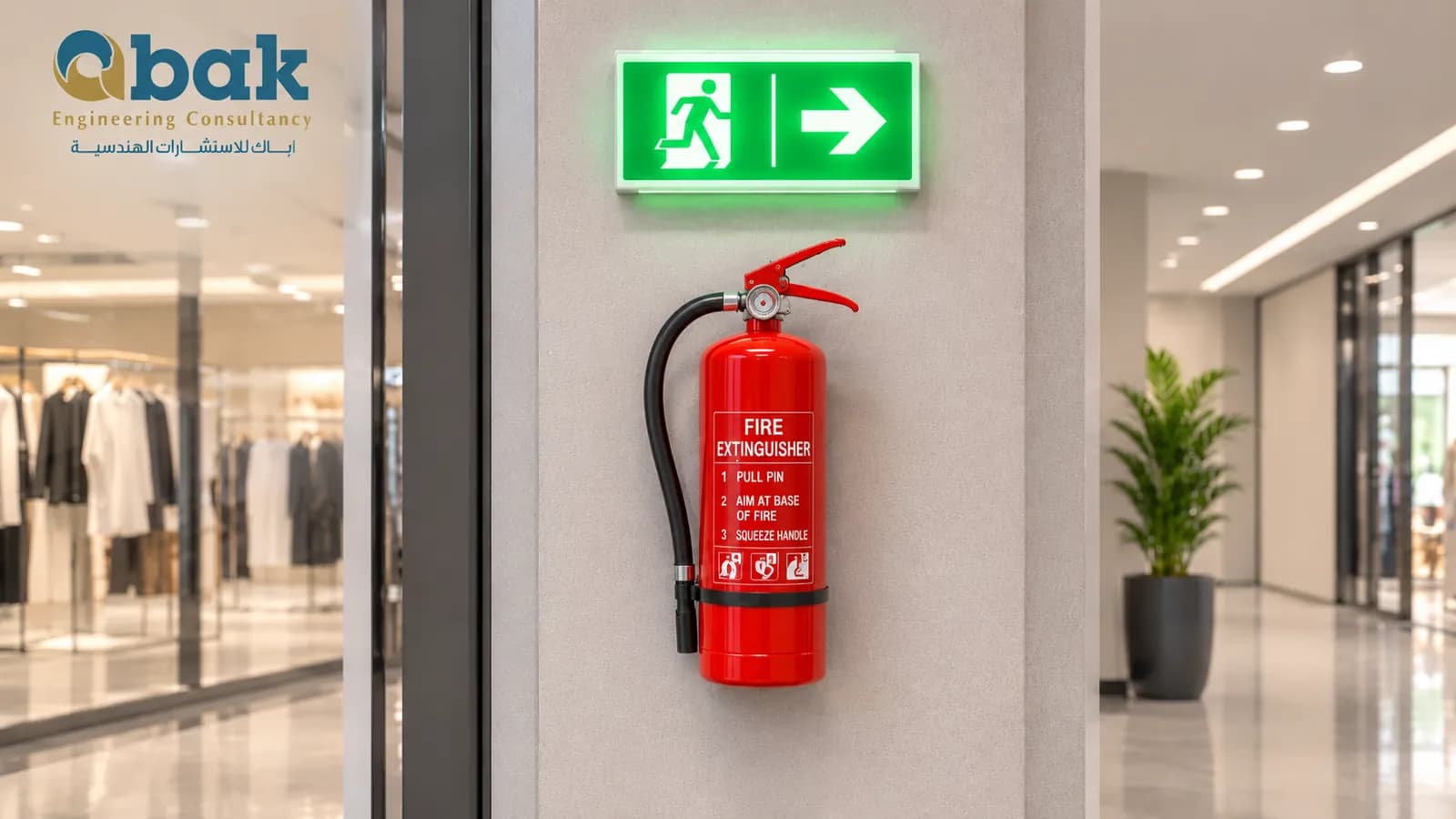
- Fire extinguishers: the right type and number for the activity and area, clearly visible, with valid servicing dates.
- Alarm system: smoke or heat detectors and a control panel, depending on the facility size.
- Automatic suppression: sprinklers or special systems (such as kitchen suppression) for activities that require them.
- Emergency lighting and exit signs: above exits and along escape routes.
- Exits and escape routes: their number, width, door swing direction and freedom from obstruction.
- Electrical installations: sound and protected, with panels not overloaded.
- Storage: safe heights and clearances, with flammable materials separated.
Steps to Obtain the Safety Certificate on Salamah
- Prepare the facility: install the required equipment through an accredited safety company and sign a maintenance contract.
- Prepare the technical report or plan from an accredited engineering office if the activity requires it.
- Log in to Salamah through the National Single Sign-On (Nafath).
- Add the facility: commercial registration number, location, area and activity code.
- Upload the documents required for the route the platform assigns.
- Site inspection if requested, and resolve any comments.
- Pay the fees, then print the certificate and display it prominently in the facility.
Common Reasons a Safety Certificate Is Rejected or Delayed
- Wrong activity code or area: this changes the route and requirements.
- Expired equipment certificate or maintenance contract, or one from a non-accredited company.
- Site differs from the plan: after fit-out changes or partitions that blocked an exit or covered a detector.
- Emergency exits locked or used for storage.
- Missing technical report for activities that require one.
- Municipal licence close to expiry, or data that does not match between Balady and Salamah.
Renewing the Safety Certificate
The validity period is shown on the licence itself, and renewal is done on Salamah before it expires. Before renewing, check that your maintenance contract and equipment certificate are valid, that the facility data matches the commercial registration and municipal licence, and that no changes to area or activity require the file to be updated. Late renewal exposes you to fines and can block the municipal licence renewal.
The Engineering Office's Role in the Safety Certificate
Safety companies install and maintain equipment, while the engineering office handles the part that needs study and approval:
- Designing and reviewing fire and alarm systems to the Saudi Code.
- Preparing safety and evacuation plans.
- Preparing technical reports on safety systems.
- Identifying the changes needed before you apply, to avoid rejection.
Safety Certificates with Abak Engineering Consultancy
Abak helps you prepare your complete Civil Defense file: safety system design and review, evacuation plans, technical safety reports, and follow-up until the licence is issued. If your project is a new building, we start with the building permit and continue through the building completion certificate.
Request the service: Civil Defense licensing service | 0531145777
Frequently asked questions
What is the difference between a safety certificate and a Civil Defense licence?
They are essentially two names for the same document, along with "safety licence" and "Civil Defense permit".
How do I obtain a Civil Defense safety certificate?
Through the Salamah platform using Nafath, or with the commercial licence on Balady for eligible activities, after preparing the required equipment and documents.
Is the safety certificate required for the municipal licence?
Yes. For activities that need a safety licence, the municipal licence or its renewal cannot be completed without paying Civil Defense fees and meeting its requirements.
How long is a safety certificate valid?
The validity is shown on the licence itself, and it must be renewed on Salamah before it expires.
Does every activity need a technical report from an engineering office?
No. The activity code and area determine this, and the platform usually requests it for higher-hazard activities.
How long does a safety certificate take?
Instant activities may be issued on the day of payment; those requiring inspection or reports take longer, depending on how ready the facility is.
Which activities require cooperative insurance?
Eight activities in the first phase, including chemical, tyre and medical waste storage, and paint and detergent manufacturing.
Does Abak provide safety certificate services?
Yes. We prepare safety and evacuation plans, technical reports and system reviews, and follow up until the licence is issued.