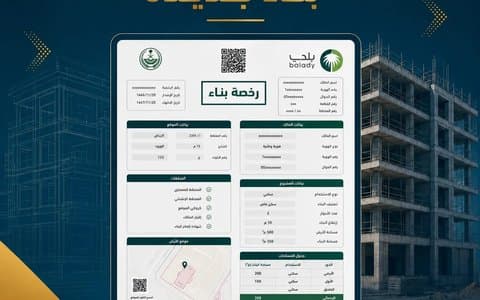
For businesses, a building is not just real estate; it is the basis for activity, operating and safety licences. If a commercial building has no permit or breaches its permit, tenants' licences and renewals can stall, branch openings can be delayed, and rental income can stop. The problem is usually discovered at the worst moment: an activity licence renewal or a new tenant moving in. This is a guide to commercial building status rectification: why it matters, the most common cases, the steps, and the requirements that follow.
Why Does the Building's Status Matter to Businesses?
- Commercial licences: Balady notes that the building permit is a required attachment when issuing a commercial licence, depending on the activity.
- Safety: Civil Defense requirements depend on the building's condition and use. See our Civil Defense licence service.
- The occupancy certificate: requires a building permit and payment of violations. Read: The occupancy certificate.
- Financing and insurance: financiers prefer properties with documents in order.
- Property value: a documented building is easier to lease and sell and is worth more.
Common Cases in Commercial Buildings
| Case | Impact | Likely fix |
|---|---|---|
| Converting part of the building from residential to commercial without a permit | Tenants' licences stall | Status rectification with a review of permitted use |
| Opening shops or altering facades without a permit | A violation and blocked compliance | Component modification or status rectification. Read: Modifying building components |
| Adding a mezzanine or floor without a permit | Structural and safety risks | Structural assessment, then status rectification |
| Converting a warehouse or workshop to another use | A different hazard classification | Review the safety requirements for the new use |
| An old paper permit not showing | Cannot be attached to commercial licences | Adding it or correcting its data. Read: Old permit not showing |
Rectification Steps
- Review the existing permit if any, or issue a survey decision for status rectification.
- Survey the building and prepare the as-built drawings, documenting the actual use of each unit.
- A structural assessment of additions (mezzanines, floors, annexes) where needed.
- Submit the status rectification application through the engineering office, with any fines calculated. Read: Fines for non-compliant buildings.
- After issue: complete the safety and commercial licensing requirements.
After Rectification: Safety and Compliance
Issuing the status rectification permit does not close the file. Commercial buildings usually also need:
- Civil Defense requirements met for each activity. Read: The Salamah portal guide.
- The building compliance certificate for facades and signs. Read: The building compliance certificate.
- Standardised shop signs and organised visible elements.
The Owner's and Tenant's Roles
The building's regulatory procedure is tied to the owner or their authorised representative, while activity licences are tied to the tenant. So both need clear coordination, and the lease should ideally set out each party's responsibility for licensing, safety and alterations.
Frequently Asked Questions
Can the tenant rectify the building's status?
The procedure is tied to the owner or their authorised representative, so coordination with the owner is required.
Does the current code have to be applied?
According to Balady, whether the code can be applied to existing buildings depends on the engineering office's report.
Can only part of the building be rectified?
The permit covers the whole building, so the building is surveyed in full and documented as it is.
Does rectification affect current tenants?
The field survey does not usually require vacating, but some fixes may need work inside units.
How long does rectifying a commercial building take?
It depends on the building's size, the number of uses and the extent of fixes required.
Related Guides
- Existing building status rectification: the complete guide
- Which permit does an existing building need?
- Bought a building without a permit?
How Abak Engineering Consultancy Helps
Abak is an accredited engineering office in Riyadh that handles commercial building status rectification from the survey to the permit, then the safety and compliance requirements, so your tenants' licences work without interruption. Learn about our status rectification service, or contact us.
Regulatory information is based on the Balady platform and the Ministry of Municipalities and Housing, and procedures may be updated by the competent authority. Last reviewed: October 2026.