Adding a floor means new loads on every element of the building, all the way down to the soil. So before thinking about an additional floor permit, you must answer one question: can the building carry it?
When buying an old property, finishes and services can be renewed, but the structure determines the building's lifespan. So a structural inspection before buying is a step that cannot wait.
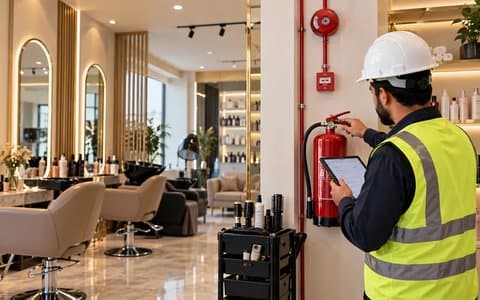
Beauty salons and women's workshops are among the most widespread activities, but they combine real fire risks: heating and drying appliances running for hours, flammable cosmetics and sprays, and small spaces often with a single exit. So Civil Defense requirements for salons are not a formality.
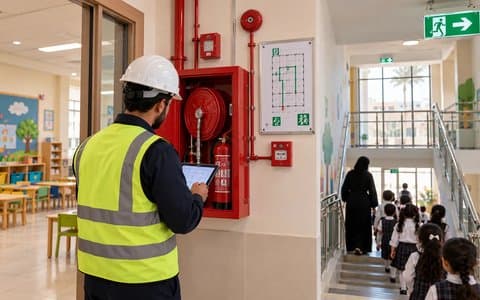
In a school, the occupants are children who depend on adults to evacuate, numbers are large, and activities range from laboratories to canteens and halls. That is why Civil Defense requirements for schools and kindergartens are among the strictest.
In a hotel or furnished apartment, the occupant is asleep and does not know the building well. These two factors make early warning and clear exits a matter of life. This is what you need to know about Civil Defense requirements for hotels and furnished apartments.
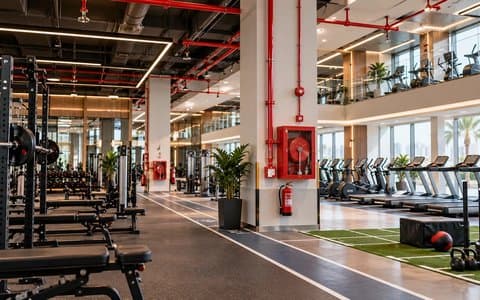
A sports club may look like a simple activity, but Civil Defense regulations treat it as an assembly building once occupancy reaches a certain level, which raises the safety requirements. Here are the Civil Defense requirements for sports clubs and gyms.
A car service workshop is a high-risk environment: fuel, oils and grease, welding and cutting, batteries and flammable waste. That is why Civil Defense requirements for workshops are stricter than for ordinary shops.
An administrative office is one of the lower-risk activities, but it is not exempt from safety: many electrical devices, paper, server rooms and staff who must be evacuated safely. This is a guide to Civil Defense requirements for offices.
There is no single set of "factory requirements"; a food factory differs from a plastics or chemicals plant. The deciding factor is the hazard classification. This is a guide to Civil Defense requirements for factories.
In restaurants, the commercial kitchen is the main fire risk: hot oil, open flames and grease building up in extractor hoods. In the dining hall, large numbers of people make exits critical. This is a guide to Civil Defense requirements for restaurants and cafés.
The retail shop is the establishment that most often applies for a Civil Defense license, which it needs to issue and renew its municipal license. This is a practical guide to Civil Defense requirements for retail shops.
A fire in a warehouse can mean losing all the goods at once, with rapid spread because of the quantities and storage heights. That is why Civil Defense issued a dedicated guide for storage buildings. This is an explanation of Civil Defense requirements for warehouses.