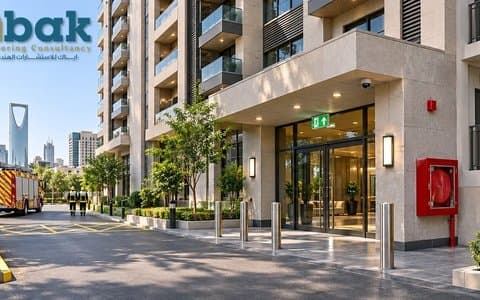
A residential building houses families who sleep in it, and the taller it is, the harder evacuation and firefighting become. That is why Civil Defense requirements for residential buildings scale with height and area. These are the main ones from the official requirements.
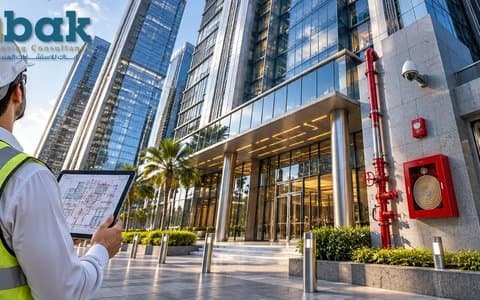
A tower is not just a slightly taller ordinary building. Every extra floor lengthens the evacuation route, keeps firefighters further from the fire, and makes smoke more dangerous than the flames. That is why the General Directorate of Civil Defense has a separate regulation for high-rise buildings, special instructions for firefighter lifts, and requires certain facilities to have private fire…
Almost every commercial establishment needs a Civil Defense license to operate legally, and it is often a condition for issuing and renewing the municipal license. Today the license is managed electronically through the Salamah portal. This complete guide explains the whole application journey.
You applied for a Civil Defense license, and may even have received an approval, but the print option does not appear? This is one of the most common problems establishment owners face on the Salamah portal. Here are the causes and solutions.
When you apply on the Salamah portal, your application falls into one of two tracks: instant or non-instant. The difference determines whether your license is issued electronically once the requirements are complete, or waits for a site inspection.
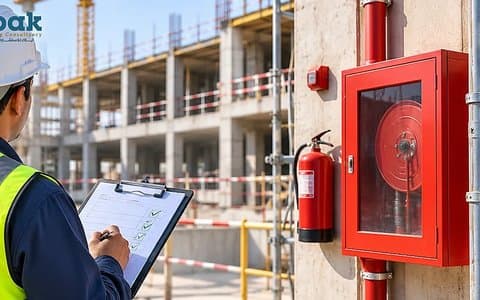
A delayed Civil Defense license can hold up the municipal license and the establishment's operation. The good news is that most causes are known and avoidable. These are the reasons a Civil Defense license is rejected or delayed, and their solutions.
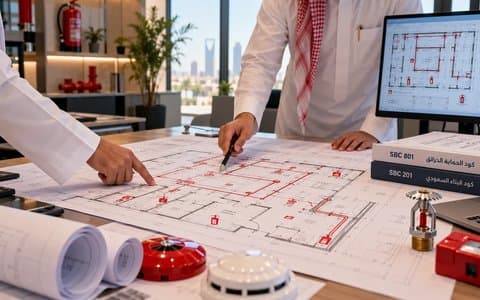
Before any alarm or firefighting system is installed, there must be an approved safety drawing that defines what is installed, where and why. This drawing is what Civil Defense and the technical reviewer check, and what the contractor builds from.
Safety drawings often come back with recurring comments that could have been avoided from the start. These are the most common Civil Defense comments on safety drawings, tied to the principles in its regulations.
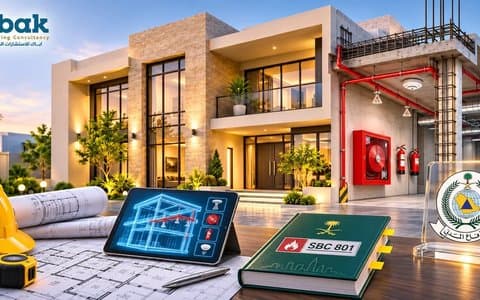
When your engineer says "the code requires this", they usually mean the Saudi Fire Code (SBC 801). It is part of the Saudi Building Code and the technical reference for fire prevention requirements in buildings and facilities.
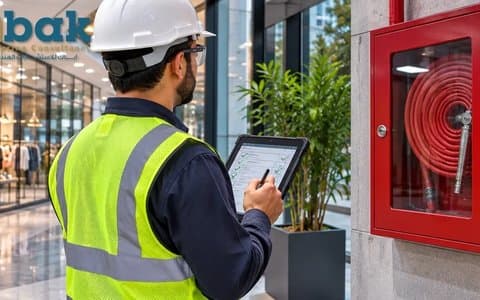
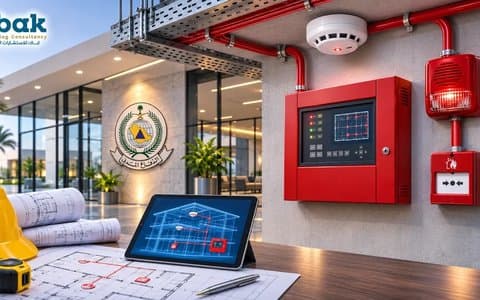
In a fire, the first minutes matter most, and the fire alarm system is what gives occupants those minutes. Civil Defense requirements state that all buildings, facilities and shops subject to its licensing must be equipped with appropriate firefighting, alarm and prevention equipment.
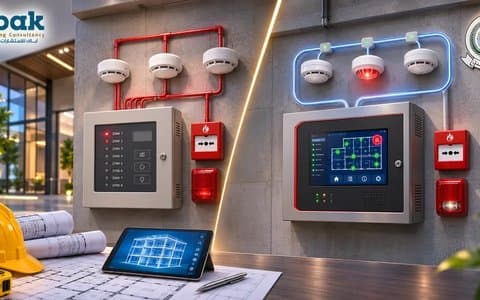
When designing a fire alarm system, the first decision is the system type: conventional or addressable. Both are acceptable, but each suits a different building size.
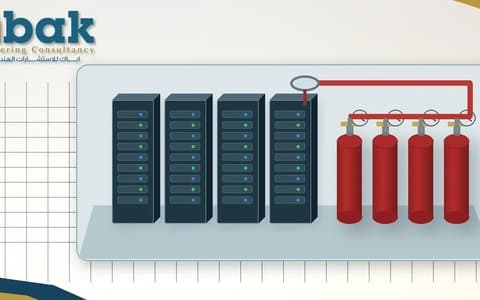
In a server room, electrical panel room or archive, putting out a fire with water can destroy what you are trying to protect. This is where clean agent suppression systems are used, the best known being FM-200.