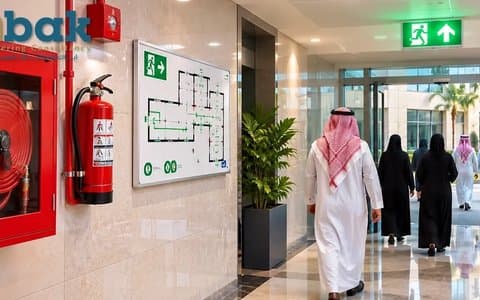
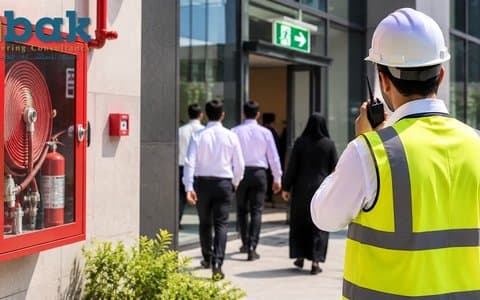
In an emergency there is no time to think. An evacuation plan is the thinking done in advance: who does what, and where everyone goes. The Civil Defense regulation for residential and office buildings requires the safety officer to prepare a detailed evacuation and firefighting plan, liaise with the competent Civil Defense centre, and train staff on it.
Civil Defense regulations require the safety officer to train staff in carrying out the evacuation plan. The practical way to do this is a fire evacuation drill, which reveals gaps that do not show on paper. Organisations usually run these drills along the approved routes and assembly points, sometimes in cooperation with Civil Defense.
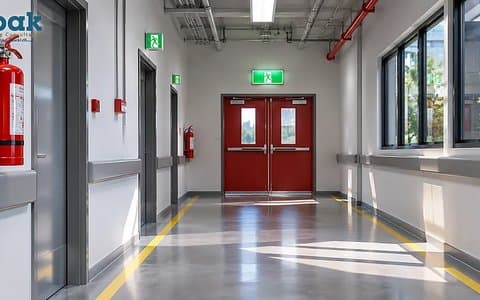
In smoke, visibility disappears within seconds, and exit signs and emergency lighting become the occupants' only guide. Escape routes must remain usable at all times.
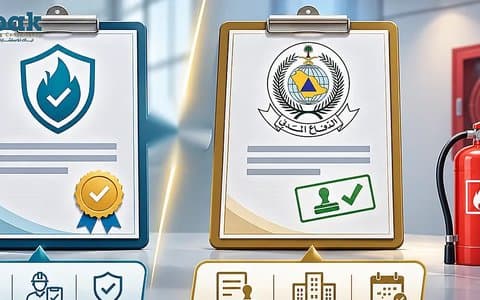
On the Salamah portal, some activities require a safety equipment certificate (invoice) and others a technical report. Confusing the two is one of the most common causes of licensing delays.
A clothing shop becoming a restaurant, an office becoming a salon, a warehouse changing the type of goods it stores: all of these are changes of activity that look administrative, but they fundamentally change the safety requirements.
A building built twenty years ago, before the regulations and code were updated: must it meet all current requirements? The answer is in the Civil Defense regulation itself.
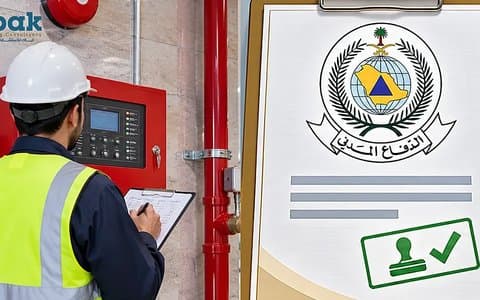
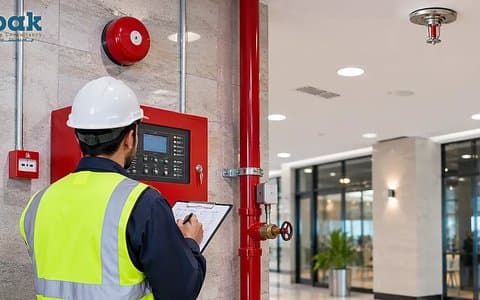
Alarm and firefighting systems may be fully installed, only for it to turn out that the pump does not deliver the required pressure, the detectors are not connected, or the sprinklers are not where the drawing shows. That is why a safety systems compliance report is needed.
The final test of safety systems is the moment when every installation mistake is exposed, and failing it means delays to operation and licensing. These are the most common reasons safety systems fail the final test.
The building owner asks about a "safety certificate", the tenant asks about a "Civil Defense license", and the municipality talks about a "compliance certificate". These are different documents, and understanding the difference saves a lot of time.
In commercial leasing, the questions are no longer only about location and price. Companies now ask: is the building ready from a safety standpoint? There are practical reasons for this.
Obtaining a safety certificate or Civil Defense license is an achievement, but keeping it valid is what really protects your establishment. Systems age, extinguishers expire and the establishment changes.
Investing in the industrial cities of the Saudi Authority for Industrial Cities and Technology Zones (MODON) involves a chain of procedures managed electronically through the MODON portal. Understanding this journey from the start saves investors months of delay. This guide sets out the stages as they appear in MODON's official services.