
As the family grows, or for extra rental income, many owners consider adding a floor to their building. The idea is attractive because it costs less than buying new land, but three questions govern it: do the zone requirements allow it, can the building carry it structurally, and what is the right permit? This guide answers them in detail.
Question One: Do the Requirements Allow It?
The permitted number of floors and height are set by the approved building regulations for the plot's location, and they may differ from one district, and one street, to another. If the building has already reached the permitted limit, the addition will not be approved regardless of its structural condition. Read: Villa building regulations in Riyadh and Apartment building regulations.
Note also that adding a floor can bring new requirements: extra parking for the new units, higher safety requirements in multi-storey buildings, and a fresh study of the electrical loads. See our electrical load calculation service.
Question Two: Can the Building Carry It?
The foundations and columns were designed for specific loads. Adding a floor means new loads on every element, all the way down to the soil. So before any step you need a structural assessment that covers:
- Reviewing the original structural drawings, if available, to find out the loads the building was designed for.
- Inspecting the condition of the columns, beams and slabs: cracks, corrosion and exposed reinforcement.
- Assessing the foundations and identifying the soil type from the original report or a new investigation.
- Determining whether elements need strengthening before the addition, or whether the addition is impossible.
Some buildings were designed from the outset to take an extra floor; others cannot carry even an annex. The report is the deciding factor. Learn about our structural inspection report service.
Question Three: What Is the Right Permit?
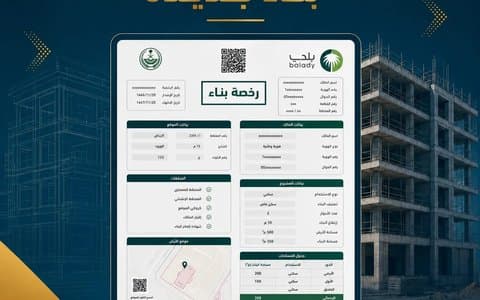
Adding a floor to a licensed building is done through Balady's Adding and Modifying Building Components service, which allows building components in the permit to be added, modified or removed. Balady answers explicitly: if the building permit has been issued and you want to add a floor and remove a component such as an annex, you can make the change through this service.
Service requirements
- Contracting an engineering office.
- Paying the service fees.
- Having a building permit.
Along with reviewing the list of requirements and government approvals required for the type of activity.
Service steps
- Log in to Balady and choose the adding and modifying building components service.
- Select the building permit to be modified.
- Select the engineering office and send the application.
- The office completes the data and prepares the required drawings.
- A payment invoice number is issued.
- After the fees are paid, the permit is issued and can be printed.
Special Cases
An old building with no permit
Balady states that old buildings with no permits can apply for the Issuing a Permit to Rectify Existing Building Status service after issuing a survey decision for the same purpose. In other words, status correction comes first, then any addition. Read: Bought a building without a permit?
An existing floor built without a permit
This is a violation, and the route is usually status correction, with any fines calculated. Read: Fines for violating buildings.
An expired permit
Building permits are valid for three years according to Balady, and are renewed through the building permit renewal service when construction is not complete.
What About the Occupancy Certificate After the Addition?
After the addition is built according to the permit, Balady offers an Issuing a Building Component Occupancy Certificate service through the supervising office. Read: Building completion certificate: the complete guide.
Tips Before Construction
- Start with the structural assessment before spending on design.
- Design the new floor with the lightest suitable structural system, if the assessment allows.
- Plan for housing the family or relocating tenants during the works if necessary.
- Contract an engineering supervisor to follow up the connection between old and new. See our supervision service.
- Review the addition's effect on the possibility of subdividing units later if you intend to sell.
Frequently Asked Questions About the Additional Floor Permit
Which service is used to add a floor?
The Adding and Modifying Building Components service on the Balady platform.
What are the requirements for adding a floor?
A building permit, a contract with an engineering office, payment of the fees, and a review of the requirements for the activity.
Can I add a floor and remove an annex in one application?
Yes, Balady states that changes to the permit after issuance are made through the Adding and Modifying Building Components service.
Can every building carry an extra floor?
No, the structural assessment determines that.
My building is old and has no permit. Can I add a floor?
The building's status must be corrected first, after issuing a survey decision for the same purpose.
Can I start building after applying?
No, wait until the permit is issued; building before that is a violation.
Do parking and safety requirements change?
They may, depending on the number of units, the use and the building's height, and the office reviews them as part of the design.
Do I need an occupancy certificate for the new floor?
Balady offers a building component occupancy certificate service through the supervising office after construction.
Can a floor be added to a commercial building?
Yes, if the requirements allow it and the building can carry it, taking into account the safety requirements and approvals for the activity.
How Abak Engineering Consultancy Helps
Abak is an accredited engineering office in Riyadh that prepares the required drawings and reports, submits the application through Balady and follows it up until issuance. Learn about our adding and modifying building components service, or contact us to review your case.
For all permit types: The complete guide to building permits in Saudi Arabia.
Regulatory information is based on the Balady platform and the Ministry of Municipalities and Housing, and procedures may be updated by the competent authority. Last reviewed: October 2026.